
N.O.R.A. — NEURAL OFFLINE RESPONSE ASSISTANT
Self-initiated product: a portable AI assistant that works without internet — hardware, software, and interface design resolved as a single functional object.
A portable, battery-powered AI assistant built on Raspberry Pi Zero W, combining cloud AI capability with a comprehensive offline emergency database of 87 life-saving articles. Gothic minimalist interface designed and coded from scratch. 30× query performance improvement over initial implementation through iterative optimisation. 7,000+ lines of code across Python and TypeScript. The project began as a design question — what would a tool that prioritised function over aesthetics look like if you refused to separate those two things? — and ended as a working device. I provided vision, hardware integration, testing, and UX direction while working with Claude as a development partner for code architecture and generation.
This project demonstrates the widest range in the portfolio — from hardware assembly and thermal management to interface design and database architecture, all resolved as a single coherent product.
YEAR
2025
TOOLS
Python, TypeScript, Raspberry Pi Zero W
ROLE
Designer + engineer (with Claude as development partner)
CONTEXT
Self-initiated
PROCESS

01
HARDWARE
The device was built around a Raspberry Pi Zero W, chosen for its balance of processing capability and physical form factor. Battery management, thermal behaviour under sustained query load, and physical enclosure design were all addressed in the hardware phase. The gothic minimalist aesthetic was established at the hardware level — the physical form of the device had to reflect the interface running on it. Design and engineering decisions were made as a single set of choices.

02
INTERFACE
The user interface was built in Python using a custom rendering pipeline designed for the constraints of the hardware. Gothic minimalist visual language — high contrast, fine typography, geometric clarity — was the design brief translated directly into code. Real-time feedback during queries required careful optimisation to maintain responsiveness on limited processing power. Every UI decision was tested against the hardware to ensure the experience matched the intent.

03
DATABASE
A comprehensive offline database of 87 life-saving articles was compiled, structured, and indexed for semantic search. The database design prioritised query performance and accuracy under emergency conditions — the system needed to surface the correct information in the fewest possible interactions, operating without connectivity, in high-stress situations. Content was reviewed for accuracy against primary medical and safety sources.

04
TESTING
Iterative optimisation cycles reduced query response time by 30× over the initial implementation — from a response latency that made the device impractical to one that felt immediate. Testing covered both performance benchmarking and real-world usability, ensuring the device remained functional under conditions where power availability, connectivity, and time pressure were all simultaneously constrained. The testing process produced as many design insights as the original build.
OUTCOME


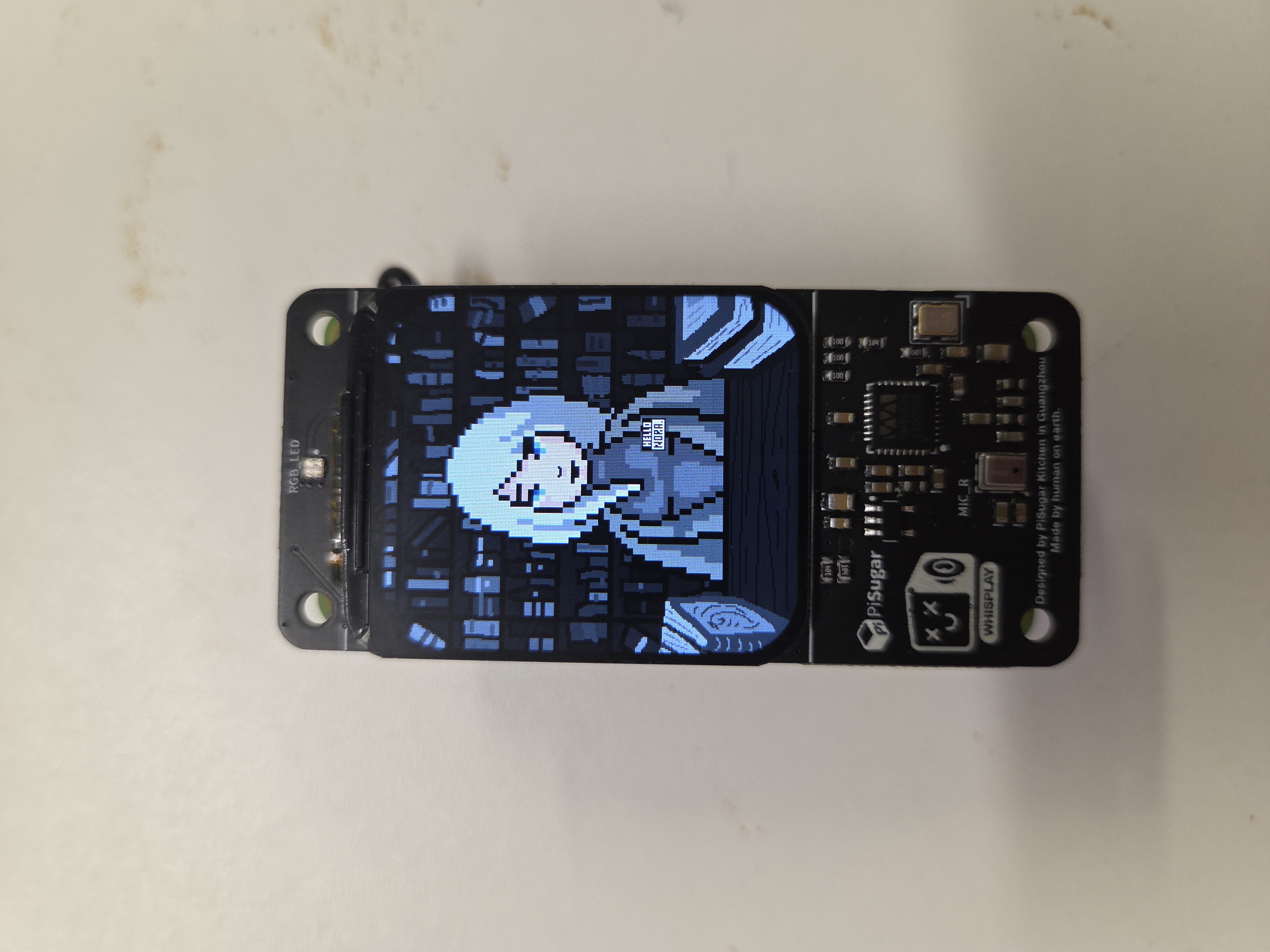
CHARACTER EXPRESSIONS
26 emotional states designed for the N.O.R.A. interface — each pixel-art sprite conveys a distinct mood, giving the device personality and feedback beyond text.
 Idle
Idle Happy
Happy Sad
Sad Thinking
 Excited
 Confused
 Embarrassed
 Laughing
 Love
Love Surprised
 Angel
Angel Angry
Angry Celebration
 Clown
Clown Cool
Cool Curious
 Devil
Devil Idea
Idea Kiss
Kiss Nerd
Nerd Relieved
 Smirking
 Winking
 Worried
 Listening
This project demonstrated that directing and collaborating is its own design skill. Working with Claude as a development partner meant every decision had to be articulated clearly enough to produce functional code — a constraint that made the design process more rigorous, not less. The result is a working device that wouldn't exist without either contributor.